A cell extraction is a planned use-of-force response correctional staff take when an inmate refuses to leave willingly, used only after verbal orders and other lower-level options fail.
Correctional Service of Canada policy treats this action as a reportable use-of-force incident, requiring video documentation, a written plan, and review at the institutional, regional, and national level. The response unit, often called an Institutional Emergency Response Team, steps in once a crisis negotiator has tried and failed to secure voluntary compliance.
For a correctional officer, the room itself sets the terms. Space is tight, exits are limited, and the individual inside has nowhere to retreat.
Gear that performs well in an open yard or hallway does not always translate to a space the size of a closet. This piece covers how teams plan a cell extraction, why law enforcement OC differs from what consumers buy online, and what correctional facilities procure for inmate control in these tight settings.
Cell Extractions Follow a Planned Escalation Process
Correctional staff reach for a cell extraction only after following the Situation Management Model in order: verbal orders, restraint equipment, then chemical agents or physical handling, with the emergency response team stepping in near the top of that sequence.
Canadian federal correctional data backs this pattern. A 2011 Correctional Service of Canada review of use-of-force incidents found that verbal orders came first in nearly every case, followed by physical handling or restraint equipment, with chemical agents and team presence reserved for situations that did not resolve at a lower level.
Documentation matters as much as the response itself. Every step, from briefing to entry to the post-incident health check, must be recorded on video and reviewed above the facility level. Skipping that record counts as a procedural violation, not a detail to fix later.
Evaluating Correctional-Grade OC
Pepper spray law enforcement is not the same product sold at a gas station counter. Federal research notes that OC aerosols made for agency use typically run five to ten percent, compared with the lower range found in sprays marketed to the public.
That number alone can mislead, though. The same research points out that spray strength depends on how the pepper was processed before extraction, not just the figure printed on the label, so two products with the same listing can perform very differently on a subject.
For a cell extraction, delivery method carries as much weight as strength. A stream or fog canister behaves differently indoors than outdoors, where fumes disperse quickly.
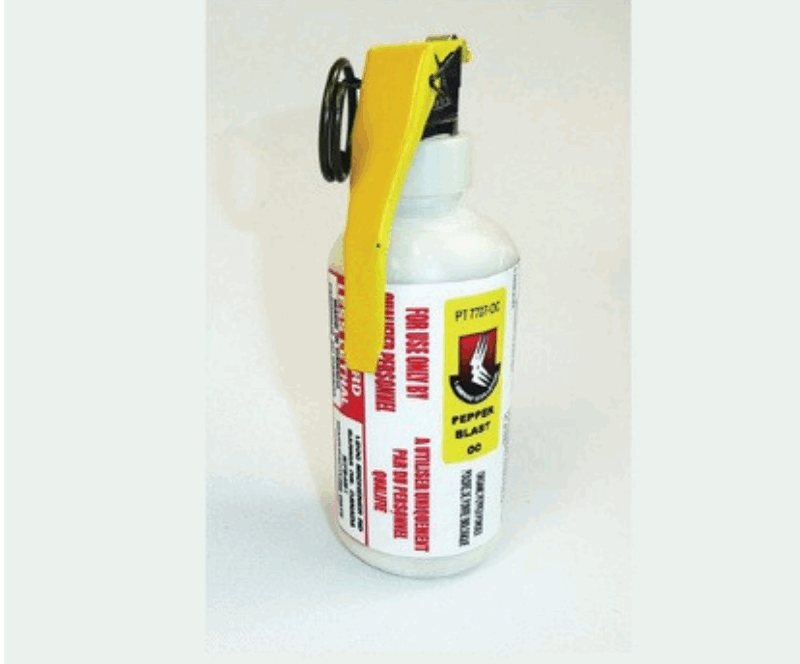
Officers using OC canisters from the Grenades need training on how the agent lingers in an enclosed space and what decontamination requires once the inmate is restrained.
Equipment Correctional Facilities Procure for Confined-Space Response
A cell extraction team typically carries tools sized for close quarters rather than open ground. Chemical agents deliver compliance without requiring officers to make contact first.
A compact platform like the 20-Gauge Defender suits close-range scenarios where a longer launcher would be awkward to maneuver through a cell doorway.
Correctional officer equipment for inmate control also includes shields, restraint gear, and protective padding, none of which replace training.
Before deploying this gear, agencies must confirm compatibility with existing platforms and document all certification requirements. As with every product in this catalogue, these tools go exclusively to police, corrections, military, and other government-authorized agencies, not to the public.
Also Read: How Does Pepper Spray Work? The Science Behind OC Spray and Its Effects
What Changes When Officers Move an Inmate Outside the Cell?
Prisoner transport introduces a different risk profile than the room itself. Once restrained, the inmate moves through a hallway, sally port, or vehicle bay, and officers lose the contained perimeter a cell provides.
Someone compliant at the doorway can turn resistive again once outside it. Transport equipment tends to shift toward restraint verification, escort formation, and lower-profile, less-lethal options, such as the 12-Gauge WASP, that do not draw attention in a public-facing part of the facility.
Departments that plan extraction and transport as a single continuum, rather than two separate events, tend to see fewer incidents during the handoff. The plan should name who controls the inmate at each transition point, from cell door to hallway to vehicle, before the operation begins.
Get Equipment Recommendations for Your Facility
A cell extraction works best as a planned, documented response, matched to the confined space officers are actually working in.
Less LethalDefenX, powered by Lampered Less Lethal, builds its equipment in a Sarnia, Ontario facility, backed by decades of engineering experience, and puts it into gear made specifically for close-quarters correctional response.
Contact us today to talk through equipment options for your cell extraction and transport protocols.
FAQs
What Less-Lethal Options Are Used During Prisoner Transport?
Departments typically carry a compact less-lethal option during transport, paired with verified restraints and a clear escort plan. The goal is to hold control through every transition point, from cell to hallway to vehicle, without adding gear that is hard to manage in a narrow corridor.
How Does Law Enforcement OC Differ From Consumer Pepper Spray?
Law enforcement OC generally runs a higher concentration than sprays sold to the public, though that number alone does not determine strength. Processing quality and delivery method, stream, fog, or gel, also shape how a canister performs inside a small room.
What Equipment Do Correctional Facilities Procure?
Facilities typically procure correctional officer equipment such as OC agents, compact defender platforms, impact rounds, restraint gear, and shields suited to close-quarters response. Selection depends on facility layout, platforms already in service, and certification requirements for the officers carrying them.
What Less-Lethal Options Work for Inmate Control?
OC spray, compact defender platforms, and impact rounds are common choices for inmate control inside a cell, since each lets officers gain compliance without immediate physical contact. Selection depends on room layout and the specific behaviour the team is responding to.
What Is a Cell Extraction Team?
A cell extraction team, generally called the IERT in federal corrections, removes a non-compliant inmate once verbal orders and other lower-level options have failed. The unit follows a documented plan and operates under video recording for the entire incident.