Accuracy with a pistol does not begin with the trigger. It begins with how you hold the firearm. The proper way to hold a pistol determines how well you control recoil, maintain sight alignment, and deliver consistent shot placement. Even small inconsistencies in grip can result in significant deviation on target.
A correct pistol grip creates stability, reduces unnecessary movement, and allows the firearm to function as a controlled extension of the operator’s hands. Understanding how to properly hold a pistol is therefore a foundational element of performance, not a secondary adjustment.
Why Proper Pistol Grip Matters
The way you hold a pistol directly affects accuracy, control, and repeatability. A stable grip allows recoil to travel in a predictable direction, which helps maintain sight alignment and improves follow-up shot consistency.
When the grip is inconsistent, the firearm may shift during discharge, causing erratic shot placement. A controlled grip ensures that each shot behaves similarly, which is essential for accuracy and precision. Consistency, rather than force, defines effective performance.
Core Principles of Holding a Pistol
Before examining hand placement, it is important to understand the principles behind a proper pistol grip. These principles guide every aspect of how the firearm should be held.
A proper pistol grip must be firm but controlled. Excessive tension can cause shaking, while insufficient grip strength reduces stability. The goal is to maintain consistent pressure that supports control without restricting natural movement.
Grip consistency is equally important. Each time the pistol is held, the position of the hands should remain the same. This repeatability ensures that sight alignment and recoil behaviour remain predictable across multiple shots.
Dominant Hand Placement
The dominant hand forms the foundation of the grip. It should position the firearm high on the backstrap, with the web of the hand seated firmly against the upper portion of the grip. This high placement reduces leverage during recoil and helps control upward movement.
The pistol should rest deep in the palm rather than in the fingers. This positioning ensures better control and reduces unnecessary movement during firing. The three lower fingers wrap securely around the grip, applying steady pressure without over-tightening.
The thumb of the dominant hand should remain relaxed along the frame. Excessive inward pressure from the thumb can interfere with alignment and create lateral movement.
Support Hand Integration
The support hand plays a critical role in stabilising the firearm. Rather than simply resting beneath the grip, it should wrap around the dominant hand, filling any open space on the grip surface.
The fingers of the support hand should align over the exposed portion of the grip, applying additional pressure that reinforces stability. Most of the gripping force typically comes from the support hand, allowing the dominant hand to remain more relaxed for trigger control.
The support hand thumb should point forward along the frame, staying clear of moving parts while maintaining alignment with the dominant hand.
Grip Pressure and Control
Grip pressure must remain balanced. Applying too much pressure with both hands can lead to fatigue and reduced control, while too little pressure allows the firearm to shift during recoil.
A controlled grip distributes pressure evenly. The dominant hand maintains firm contact, while the support hand reinforces the grip with slightly greater pressure. This balance allows for stability without compromising precision.
Maintaining consistent pressure throughout the firing sequence is critical. Variations in grip pressure often result in inconsistent shot placement.
Trigger Finger Placement
Accuracy depends not only on grip but also on how the trigger is pressed. The trigger finger must move independently of the rest of the hand.
The correct way to hold a pistol includes placing the trigger finger so that it presses straight to the rear. Improper placement can cause the firearm to move left or right during discharge.
The finger should engage the trigger in a way that allows smooth, controlled movement without disturbing the alignment of the firearm.
Read More: How to Choose the Right Defender Revolver for Protection?
Wrist Position and Stability
Wrist alignment plays a significant role in controlling recoil. Both wrists should remain locked and stable, creating a solid structure that supports the firearm.
When the wrists are not aligned properly, recoil can cause the firearm to shift unpredictably. A stable wrist position ensures that recoil travels in a consistent direction, allowing faster recovery between shots.
Maintaining this structure improves both accuracy and overall control.
Two-Handed Grip for Maximum Accuracy
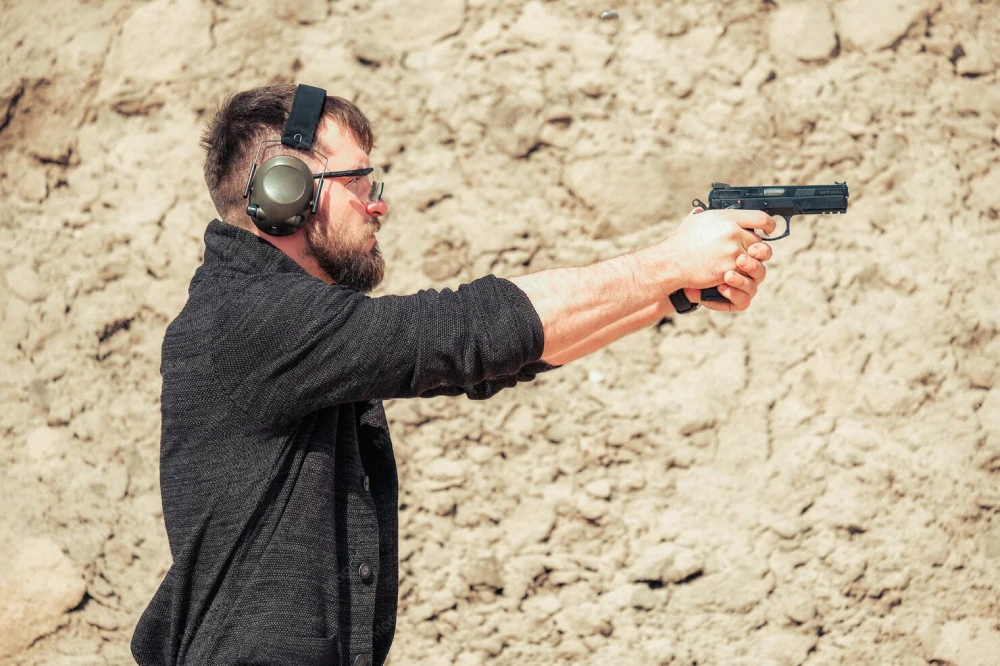
Modern shooting techniques emphasise a two-handed grip as the most effective method for maintaining control. This approach maximises contact with the firearm and distributes force across both hands.
The two-handed grip creates a stable platform that supports consistent alignment and recoil management. By increasing the surface area in contact with the firearm, it reduces movement and improves shot grouping.
This method has become the standard because it provides the highest level of control and repeatability.
Common Mistakes When Holding a Pistol
Even minor errors in grip can significantly affect accuracy. One common mistake is holding the firearm too low on the grip, which increases muzzle rise and reduces control.
Another frequent issue is uneven pressure between the hands. When one hand dominates excessively, it can cause the firearm to shift during firing. Balanced pressure is essential for stability.
Holding the pistol too tightly can also reduce performance. Excessive tension leads to fatigue and disrupts fine motor control. The grip should remain firm but controlled.
Finally, rotating the firearm sideways reduces sight alignment and makes accurate aiming difficult. Maintaining a vertical orientation ensures proper alignment with the sights.
Consistency as the Key to Accuracy
Accuracy is not achieved through a single action. It is the result of consistent technique. Each element of the grip must remain stable across repeated shots.
Consistency in hand placement, grip pressure, and alignment ensures that each shot behaves similarly. This repeatability is essential for maintaining accuracy over time.
The ability to replicate the same grip every time the firearm is held is one of the most important aspects of performance.
Conclusion
Understanding how to properly hold a pistol is fundamental to achieving maximum accuracy. A correct grip provides stability, improves recoil control, and ensures consistent shot placement.
By positioning the dominant hand high on the grip, integrating the support hand effectively, maintaining balanced pressure, and ensuring proper trigger control, operators can achieve a stable and repeatable grip.
The best way to hold a pistol is not defined by force or tension, but by structure and consistency. When these principles are applied correctly, the firearm responds predictably, allowing for precise and controlled performance.