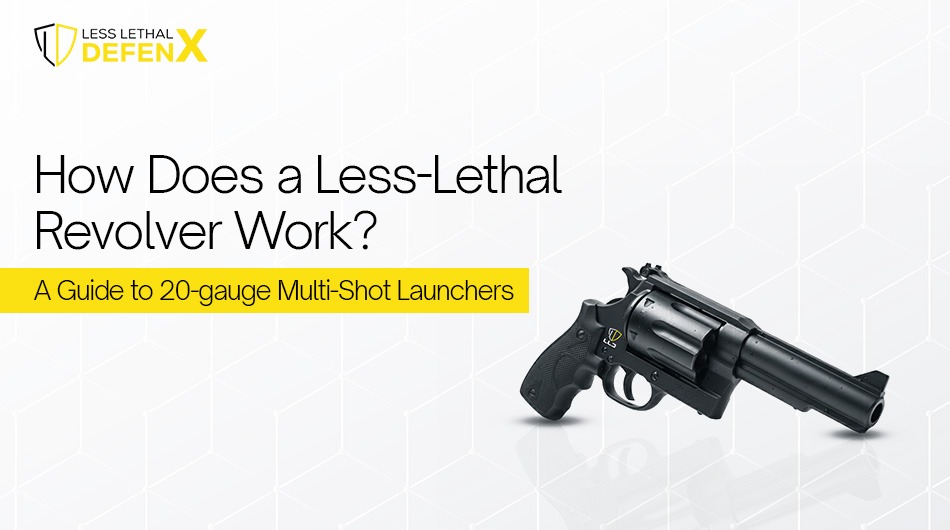
How does a less-lethal revolver work? It holds several 20-gauge less-lethal shells in a rotating cylinder, and each trigger pull rotates the next loaded chamber into line with the barrel. An officer can fire up to five rounds without stopping to reload. The launcher itself is mechanically simple.
The round in each chamber changes the result: a rubber impact projectile, an OC pepper round, or a distraction round. For agencies, the revolver sits between a single-shot 37mm launcher and a dedicated less-lethal shotgun.
Every round fired from a less-lethal launcher ends up in a report. Use-of-force reviewers will ask which munition was loaded, why the officer chose it, how far away the subject stood, and whether the officer was trained on that specific platform. A procurement decision made today becomes part of that record.
Choosing a multi-shot revolver puts more rounds in an officer’s hands at once, which raises the bar for training, round selection, and written policy. Agencies that understand the mechanics before they buy are better positioned to explain each deployment afterward to oversight bodies and the public.
The sections below start with the mechanics, then compare platforms and rounds, and finish with crowd control use and field maintenance.
How Does a Less-Lethal Revolver Work?
A less-lethal revolver uses the same basic mechanism as a conventional revolver, scaled up to take a 20-gauge shotgun shell. A 20-gauge bore measures about 15.6 mm across, smaller than a 12-gauge and far smaller than a 37mm launcher.
The Cylinder and Firing Cycle
The cylinder holds one shell per chamber. When the officer works the action, the cylinder rotates one position and locks a fresh chamber behind the barrel. The firing pin strikes the primer, and the propellant charge sends the projectile or payload down the barrel. Spent hulls stay in the cylinder until the officer opens it to unload, so there is no ejection cycle and no brass left on the ground.
The LLD 20-gauge Defender
The LLD 20-gauge Defender is a five-shot revolver with a 1.5-inch barrel, built in Canada for law enforcement, corrections, military, and border security units. The short barrel keeps it compact for vehicles, corridors, and cell blocks. Before writing figures such as weight or rated engagement distance into policy, confirm them against the documentation for the configuration you order.
The Use of Force and Weapons Regulation (Ontario Regulation 391/23) outlines requirements relevant to the use of force and weapons by police services. Agencies should consider these requirements alongside their internal policies, training standards, and approved ammunition when evaluating less-lethal launchers.
Also Read: Cell Extractions: Less-Lethal Options for Confined Spaces
20-Gauge VS 37mm Less-Lethal Launcher Comparison
Procurement teams asking what a less-lethal launcher is used for in their own agency usually already own a 37mm platform. The more useful question is what a 20-gauge revolver adds to it.
| Specification | LLD 20-gauge Defender | LLD 37 mm Launcher |
| Capacity | 5 rounds | 1 round |
| Loading | Rotating cylinder | Break-open breech |
| Barrel | 1.5 in | 6.25 in smooth bore |
| Overall length | Confirm with the team | 12.5 in |
| Listed munitions | Rubber impact, OC pepper, distraction | Pepper powder, tear gas, rubber impact, distraction |
| Typical fit | Repeat rounds at close range | Single larger payloads, chemical agents |
The 37mm platform carries larger payloads, including tear gas, and its break-open breech loads easily with gloves on. The trade-off is one round per load. The LLD 37 mm Launcher suits teams that deploy a chemical agent or a single impact round and then reassess.
The 20-gauge revolver suits officers who may need a second round before there is time to reload, such as during an arrest where the subject keeps moving.
Types of 20-Gauge Less-Lethal Rounds
The revolver is only as useful as the munitions an agency stocks. The current catalogue lists three types of 20-gauge less-lethal rounds suited to the platform, each serving a different purpose.
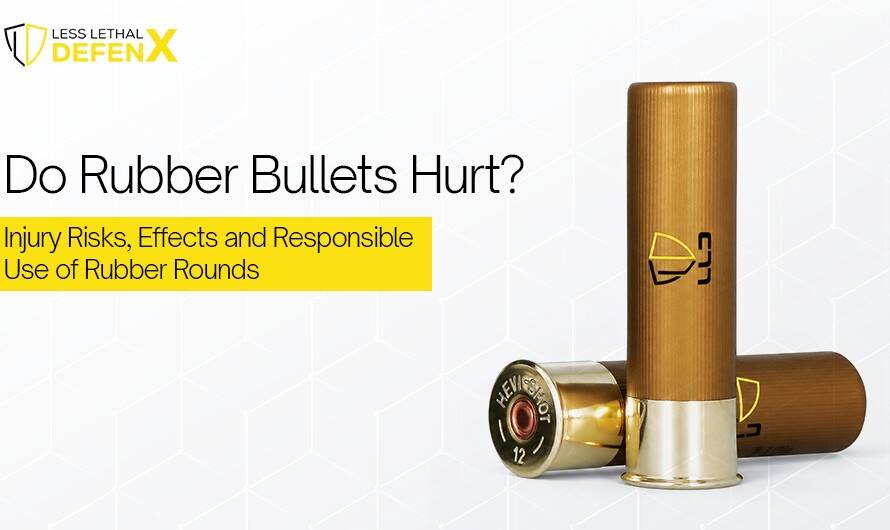
- Rubber impact round. The 20-gauge WASP fires a 12 g rubber projectile built to spread its energy across the point of contact. The manufacturer lists it for use from-50°C to +50 °C.
- OC pepper round. The 20-gauge Pepper Muzzle releases a measured cloud of OC powder at the muzzle, intended for close range in hallways, cells, and vehicles.
- Distraction round. The 20-gauge Distraction produces a 135-decibel report from a 50-grain powder charge. It is meant to disorient, not strike.
Mixing rounds in one cylinder is as much a policy decision as a technical one. Write down the loading order and train to it, so an officer always knows what the next chamber holds.
Using a Revolver in Crowd Control and Public Order
A less-lethal revolver for crowd control is a targeted tool. It is a poor fit for dispersing a whole group, and agencies that treat it as one take on avoidable risk.
Five rounds on hand let an officer address one person who is throwing objects or assaulting others, then reassess without lowering the launcher to reload. Research on impact projectiles shows why that discipline matters.
Training standards and distance policy respond directly to those findings. Agencies building a public order kit around the revolver can review the Defender range alongside their existing launchers.
Field Maintenance and Storage
Knowing how to maintain a less-lethal revolver is part of qualifying. The mechanism has few moving parts, but OC powder and propellant residue build up quickly.
- After every deployment or training session, unload and clean the bore and each chamber. Residue in the chambers makes shells harder to seat and remove.
- Check that the cylinder turns freely and locks at each position. A cylinder that stops short or wobbles comes out of service until an armourer inspects it.
- Inspect each shell before loading. Swollen, cracked, or damp hulls go back to stores.
- Store munitions in a cool, dry place and rotate stock by date, following the manufacturer’s shelf-life guidance.
Keep each launcher’s maintenance log beside the qualification records of the officers who carry it. The Defender and its munitions are sold only to police, corrections, military, and other government-authorized agencies, and are not available to the general public.
Choosing a 20-Gauge Revolver for Your Agency
So how does a less-lethal revolver work in practice? Five 20-gauge rounds sit in a rotating cylinder; the officer can follow up without reloading, and the result depends on the rounds stocked and the training behind them.
Less Lethal DefenX, powered by Lampered less-lethal in Sarnia, Ontario, builds its launchers and ammunition in Canada. Each round goes through 12 to 17 manufacturing steps, with production running at 300 to 600 rounds per hour. The company supplies authorized agencies across North America, the Middle East, Europe, Africa, and Asia.
Contact us today to request specifications and a quote for the LLD 20-gauge Defender.
Frequently Asked Questions
What Is a Less-Lethal Launcher Used for in Law Enforcement?
They deliver impact, chemical irritant, or distraction rounds in situations requiring force below lethal thresholds, such as public order, corrections, or barricaded subjects. Deployments follow standard use-of-force oversight.
What Is the Difference Between a 20-Gauge and a 37mm Less-Lethal Launcher?
37mm launchers have a wider bore for larger payloads (like tear gas) but are typically single-shot. 20-gauge revolvers hold five smaller shells, making them better for close-range follow-up shots.
What Types of 20-Gauge Less-Lethal Rounds Can a Revolver Fire?
They fire rubber impact, OC pepper, and distraction rounds. Always verify shell length and pressure compatibility before loading rounds from different manufacturers.
Why Do Agencies Use a Multi-Shot Less-Lethal Revolver for Crowd Control?
It lets officers deliver immediate follow-up shots without lowering the launcher to reload, keeping their focus on the threat. Standard distance and targeting policies still apply.
How Do You Clean and Maintain a Less-Lethal Revolver in the Field?
Unload the launcher, wipe the bore and chambers to remove residue, verify cylinder lockup, and set aside damaged shells. Log the check by serial number and send failing units to an armorer.