

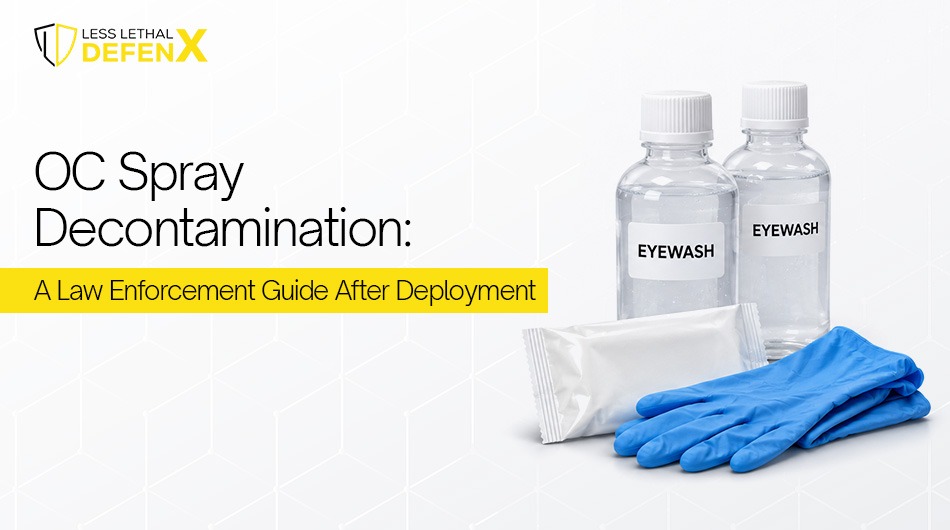
OC spray decontamination is the work of removing oleoresin capsicum from a person, their clothing and the space around them after pepper deployment, then watching that person until the effects pass. OC is an oily resin extracted from hot peppers. It inflames the eyes, skin and airways, forcing the eyes shut and bringing on coughing.
Because the resin clings to skin, hair and fabric, symptoms flare again if a subject rubs their face or stays in contaminated clothing. Decontamination shortens that distress and marks the point where the agency’s duty of care takes over from the use of force.
Aftercare is where many OC deployments get judged. Reviewers will ask how long the subject waited before flushing, who watched their breathing, whether a health care professional saw them, and why a refusal was or was not recorded. A lawful deployment followed by slow or undocumented aftercare can still end in a complaint, a grievance or a civil claim. Agencies that write decontamination into policy, stock the supplies and train officers on them give their people a firm standard and a record that holds up later.
What follows covers aftercare steps, supplies, cleanup of enclosed spaces, and aerial burst rounds.
How OC Spray Decontamination Removes the Irritant
OC has no recognized antidote, so recovery relies on fresh air, a long flush with clean water and time. Most of the burning comes from resin still sitting on the skin and around the eyes, so a quick splash rarely settles it. Steady flushing does, along with keeping hands away from the face.
OC exposure varies with dose, distance and space, and a subject at the edge of an outdoor cloud usually recovers sooner than one sprayed in a closed room. OC spray recovery also slows when contaminated clothing stays on, because the resin keeps transferring back to the skin.
Aftercare Steps From Exposure to Medical Check
Correctional Service Canada sets out a workable sequence in Commissioner’s Directive 567-4, its policy on chemical and inflammatory agents in federal institutions. Police and provincial agencies can compare the sequence against their own policy.
- Move the subject out of the contaminated area and into fresh air.
- Have them remove glasses or contact lenses and tell them not to rub their eyes.
- Remove contaminated clothing.
- Flush the eyes and wash the skin with water for at least 15 minutes, using a shower if available.
- Watch their breathing throughout and act on any sign of distress.
- Provide clean clothing and arrange an examination by a health care professional.
The directive also requires decontamination to be video-recorded and any refusal to be documented. Pepper spray decontamination under restraint needs extra care. The directive calls for restraints to be removed for decontamination unless the risk requires otherwise, in which case an officer maintains direct physical control and records why.
Close-range rounds such as the 20 Gauge Pepper Muzzle concentrate OC at short distance, often on one person, so that person’s aftercare should begin as soon as the scene is safe.
Supplies Worth Carrying After OC Use
Pepper spray decontamination depends on having the kit within reach. Patrol vehicles, transport vans and unit control posts each need their own.
- Bottled water or saline to start a flush before a shower or sink is available
- OC decontamination wipes for the face, neck and hands
- Nitrile gloves, so officers do not pick up resin while assisting
- Clean clothing or disposable coveralls and sealable bags
- Personal eyewash units for the first minutes after OC exposure
The Canadian Centre for Occupational Health and Safety notes that personal eyewash units are single-use, carry an expiry date and supplement a plumbed station rather than replace it. It also reports that people flushing with very cold water tend to stop within five minutes, so tepid water makes it easier to finish the full flush that OC spray recovery depends on.
Clearing Residue From Enclosed Spaces
OC powder and droplets settle on floors, ledges, bedding and seats. A space is not finished with OC spray decontamination until the air has cleared and the surfaces are washed. Hand-deployed devices such as the LLD Lightweight Pepper Blast spread powder across a wide radius, so cleanup after one covers the whole room.
| Space | First step | Cleaning | Before reuse |
| Cell or room | Open doors and windows, run fans | Wash surfaces with water and lift dry powder with a wet and dry vacuum | Bag bedding and remove spent casings |
| Transport vehicle | Open all doors until the air clears | Wipe seats, belts and handles, then vacuum the footwells | Check the rear compartment before the next transport |
| Duty gear | Bag exposed items at the scene | Launder uniforms separately and wipe cuffs and holsters with OC decontamination wipes | Inspect each item before reissue |
Aerial Burst Rounds Leave a Wider Footprint
An aerial burst round releases OC overhead across an area, so aftercare must plan for several people at once. The manufacturer advises against indoor use of the 37 mm Aerial Burst Pepper and lists 10 to 30 minutes of irritation, depending on exposure and conditions.
Set up an OC decontamination point upwind with water and wipes for anyone who comes forward, and check the officers who worked downwind before standing down.
Also Read: How Does Pepper Spray Work? The Science Behind OC Spray and Its Effects
Making Decontamination Part of Every Deployment
OC spray decontamination works best when water, wipes, ventilation and a medical check are planned before the first round is fired and recorded every time.
Less Lethal DefenX designs and builds its OC munitions in Canada through Lampered Less Lethal in Sarnia, Ontario. Each round passes through 12 to 17 manufacturing steps, and the line produces 300 to 600 rounds per hour for authorized agencies in North America, the Middle East, Europe, Africa and Asia. These products are sold only to police, corrections, military and other government-authorized agencies.
Contact us today to choose OC munitions for the spaces your officers work in.
Frequently Asked Questions
What Counteracts OC After Exposure?
Fresh air, a long water flush and time, since OC has no recognized antidote. Removing contaminated clothing and keeping hands away from the face stop the resin from spreading.
How Should Officers Decontaminate a Subject After OC Deployment?
Move them to fresh air, remove glasses or contacts and contaminated clothing, then flush the eyes and skin for at least 15 minutes while watching their breathing. Arrange a health care check afterward.
What OC Decontamination Supplies Should Agencies Carry?
Water or saline, decontamination wipes, nitrile gloves, spare clothing, sealable bags and personal eyewash units, with expiry dates checked during routine vehicle and post inspections.
How Do You Clean OC Residue From a Cell, Room or Vehicle?
Ventilate first, wash hard surfaces with water, vacuum loose powder with a wet and dry vacuum, bag fabrics for laundering and remove spent casings before the space is used again.
How Is OC Decontamination Different After an Aerial Burst Round Compared to a Handheld Spray?
An aerial burst round spreads OC over an outdoor area, so several people and nearby staff may need aftercare at once. A handheld spray usually affects one person at close range

