Less-lethal launcher systems have become central to modern operational frameworks where agencies must manage complex situations with precision, control, and accountability.
Among the most widely used platforms are the 37mm launcher system and the 9mm less-lethal system, each designed to deliver specific types of less-lethal launcher ammo for defined operational outcomes.
Selecting between these tactical launcher weapons requires a clear understanding of their capabilities, limitations, and appropriate use cases.
Both systems support structured responses within use-of-force frameworks, yet they differ significantly in application, range, and effect.
The Role of Less-Lethal Launchers in Operational Environments
Less-lethal launchers function as delivery platforms for specialised ammunition designed to influence behaviour, control movement, and stabilise volatile situations. These systems allow agencies to apply force in a controlled and proportionate manner without defaulting to lethal options.
A properly selected crowd control launcher enables distance-based engagement, predictable energy delivery, and consistent performance. Modern systems integrate engineered ammunition with launcher design to ensure that each deployment aligns with operational objectives.
Manufacturers such as Less Lethal DefenX focus on system compatibility and quality control, ensuring that both launcher and ammunition perform within defined parameters.
Overview of the 37mm Launcher System
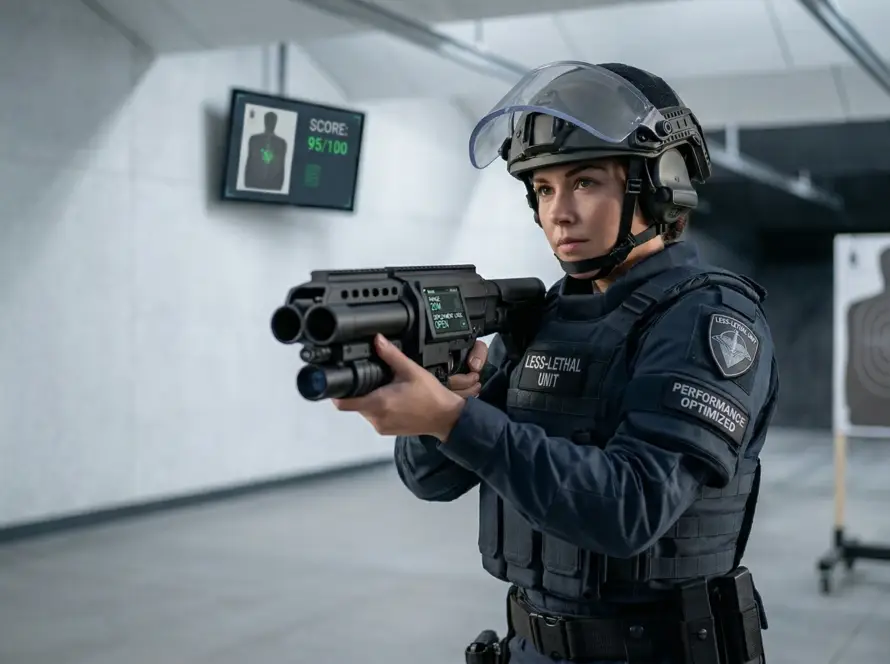
The 37mm launcher system is one of the most versatile platforms in the less-lethal category. Originally developed for flare and smoke signalling, it has evolved into a multi-role system capable of deploying a wide range of less-lethal launcher ammunition.
Key Characteristics of 37mm Launchers
- Smoothbore design supporting diverse projectile types
- Compatibility with impact, irritant, smoke, and signalling rounds
- Effective for area control and crowd management
- Designed for a predictable trajectory and dispersal
The larger bore size allows for more complex projectile designs, including rounds that produce wide-area effects. This makes the 37mm launcher system particularly effective in crowd control scenarios where influencing group movement is critical.
Applications of the 37mm Crowd Control Launcher
The 37mm platform is widely used as a crowd control launcher due to its ability to deploy:
- Irritant dispersal rounds for area influence
- Smoke projectiles for visibility control
- Impact munitions for targeted intervention
- Signalling rounds for coordination and communication
These capabilities allow agencies to manage large-scale environments without relying on direct physical engagement. The system’s flexibility supports scalable responses across varying levels of intensity.
Overview of the 9mm Less Lethal System
The 9mm less lethal system represents a different category of tactical launcher weapons. Unlike the 37mm platform, which focuses on area effect and versatility, 9mm systems are typically designed for more focused, direct applications.
Key Characteristics of 9mm Less Lethal Systems
- Compact platform design
- Limited range compared to 37mm systems
- Typically used with specific, less lethal projectile types
- Designed for controlled, targeted engagement
These systems often resemble conventional firearm platforms but are configured to deploy less lethal ammunition. Their design emphasises precision over area coverage.
Comparing 37mm and 9mm Less Lethal Systems
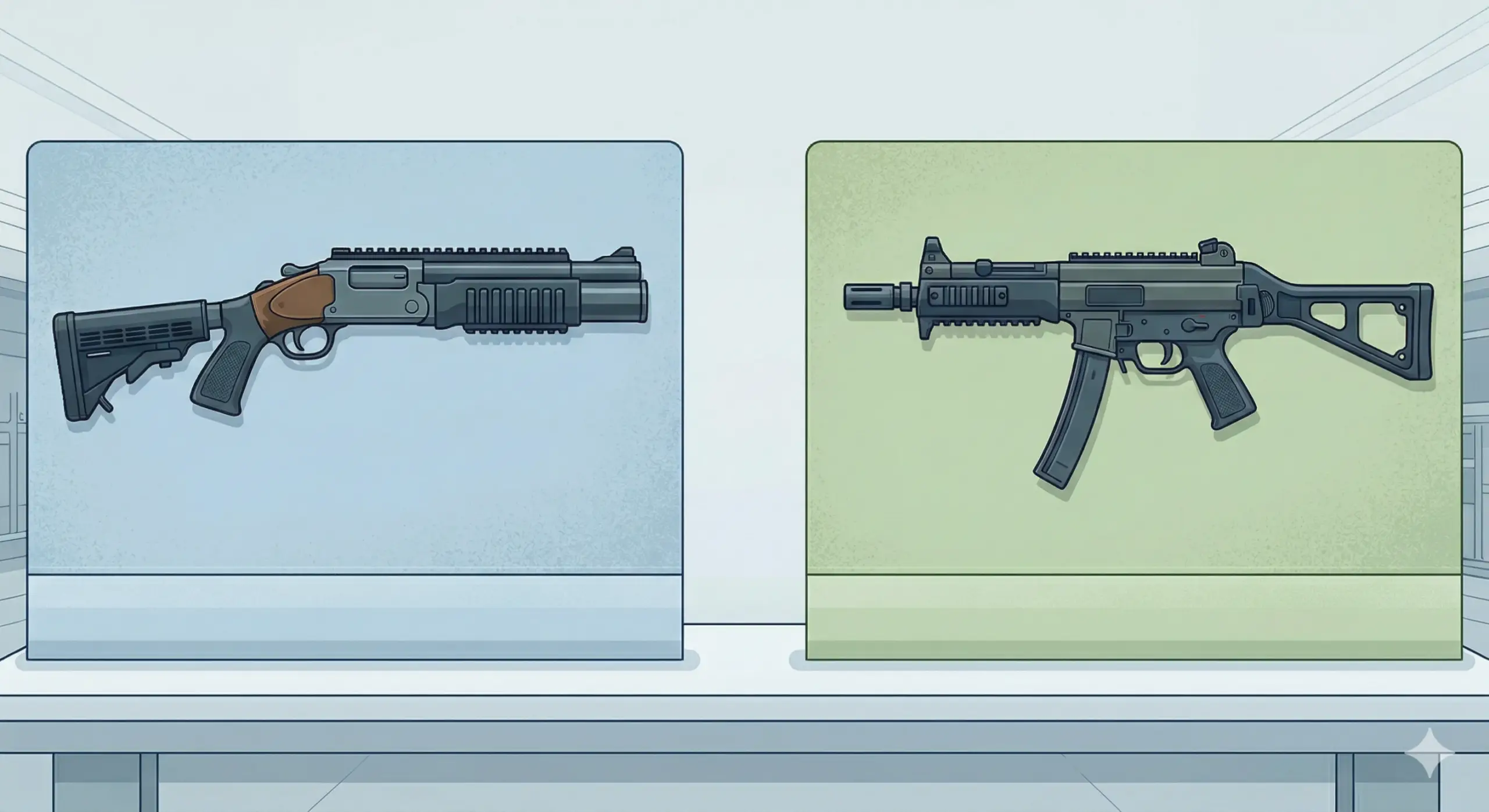
Understanding the differences between a 37mm launcher system and a 9mm less lethal system is essential when selecting the right tactical solution.
Range and Coverage
A 37mm launcher provides broader coverage and supports area effect munitions. It is well-suited for crowd control scenarios where influencing group movement is required.
A 9mm less lethal system operates at shorter ranges and is better suited for controlled, targeted engagement.
Ammunition Versatility
The 37mm platform supports a wide range of less-lethal launcher ammunition, including irritant, smoke, and signalling rounds. This versatility allows for multiple response options within a single system.
The 9mm system typically supports a narrower range of ammunition, focusing on specific projectile types designed for direct application.
Operational Flexibility
A 37mm crowd control launcher offers greater flexibility in dynamic environments. Its ability to deploy multiple munition types makes it adaptable to changing conditions.
The 9mm system provides precision but less adaptability in large-scale or high-density scenarios.
Less Lethal Launcher Ammo and System Compatibility
The effectiveness of any launcher system depends heavily on the compatibility and quality of its ammunition. Less-lethal launcher ammo must be engineered to meet the platform’s specifications to ensure predictable performance.
Manufacturers such as Less Lethal DefenX emphasise:
- Consistent energy transfer
- Controlled dispersal patterns
- Strict quality control standards
Selecting ammunition without verifying compatibility can lead to inconsistent performance and increased operational risk. Agencies must treat launcher and ammunition as an integrated system rather than separate components.
Design Considerations for Tactical Launcher Weapons
When evaluating tactical launcher weapons, agencies should prioritise:
- Predictable trajectory and accuracy
- Controlled energy delivery
- Durability under repeated use
- Compatibility with multiple ammunition types
- Manufacturer quality assurance
The best systems balance reliability with adaptability. A well-designed launcher supports consistent outcomes across a range of operational conditions.
Choosing the Right System for Crowd Control
Selecting the right crowd control launcher depends on operational requirements rather than preference. Agencies must assess:
- Scale of engagement
- Need for area effect versus targeted response
- Environmental conditions
- Desired level of flexibility
In large-scale environments, the 37mm launcher system often provides the versatility needed for effective crowd management. Its ability to deploy multiple munition types supports structured, scalable responses.
In more controlled environments that require precision, a 9mm less-lethal system may offer advantages due to its focused application.
Operational Integration and Accountability
Modern less-lethal systems must align with structured operational protocols. Predictable performance allows agencies to define clear deployment thresholds and maintain accountability.
Both 37mm and 9mm systems support this objective when properly integrated. However, the broader capabilities of the 37mm platform often make it better suited to environments where conditions can change rapidly.
Consistency in performance supports documentation, review processes, and overall organisational transparency.
The Importance of Manufacturer Expertise
Selecting advanced less-lethal systems requires confidence in the manufacturer’s design and production standards.
Less Lethal DefenX focuses on delivering integrated solutions that combine launcher reliability with engineered ammunition performance.
Their approach ensures that tactical launcher weapons meet the demands of real-world operations while maintaining strict quality control.
Choosing systems from experienced manufacturers reduces uncertainty and supports long-term operational effectiveness.
Conclusion
Understanding the differences between a 37mm launcher system and a 9mm less lethal system is essential for selecting the right equipment for operational needs. While both platforms serve important roles, they are designed for distinct applications.
The 37mm launcher system offers versatility, scalability, and area-control capabilities, making it a preferred choice for crowd-control applications. The 9mm less lethal system provides precision and controlled engagement for more focused scenarios.
By evaluating ammunition compatibility, system design, and operational requirements, agencies can select tactical launcher weapons that deliver consistent, predictable performance.