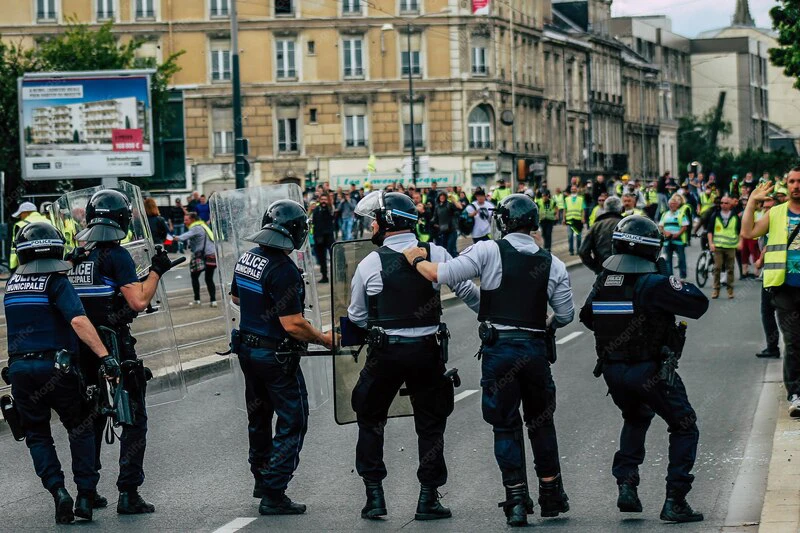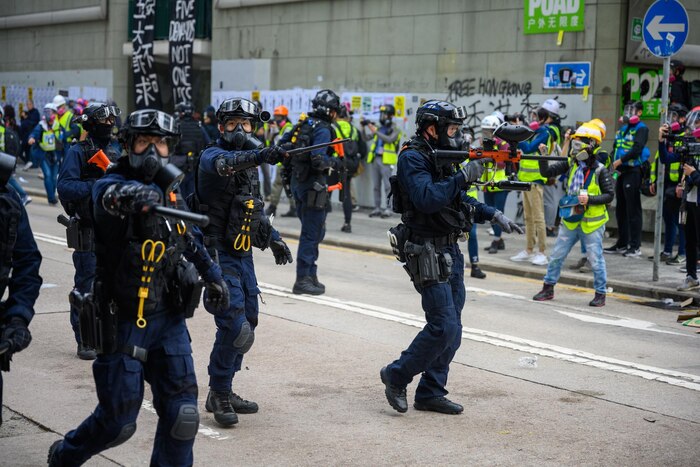
Modern agencies face a wide range of operational challenges, including crowd management, riot response, containment, extraction, and compliance situations.
Less lethal weapons play an essential role in these environments because they offer controlled force options that support agency missions while helping safeguard personnel and subjects from unnecessary harm.
Understanding what these tools actually do helps agencies choose systems that align with operational needs and public safety expectations.
Understanding the Purpose Behind Less Lethal Tools
Less lethal weapons are designed to interrupt behaviour, create movement, delay action, deny access, establish boundaries, or disperse gatherings. They are tactical tools that help teams manage situations where lethal force is inappropriate or counterproductive.
Unlike traditional firearms, these systems are built around predictable energy output and specific performance profiles. This allows teams to achieve necessary compliance while maintaining a safer operational posture.
Agencies rely on less-lethal tools for a wide variety of tasks, including crowd pressure reduction, area control, subject redirection, cell extraction, port-of-entry security, and large-event management.
How Less Lethal Effects Work?
Less lethal weapons work through controlled impact, sensory disruption, disorientation, or irritant dispersion.
- Impact tools deliver kinetic energy designed to interrupt forward movement or induce immediate compliance.
- Irritant-based tools create sensory overload through airborne OC materials.
- Distraction devices rely on intense sound and light to create a momentary break in attention, giving teams a safe engagement window.
Each effect type has its own operational purpose. Agencies select munitions based on crowd density, proximity, environmental conditions, and the urgency of the mission. A well-structured, less lethal strategy uses a layered approach so teams can switch between tools without losing tactical continuity.
Where Less Lethal Tools Fit into Operational Planning?
In most agency operations, less lethal systems support a continuum of force. They are positioned to provide intermediate force options between verbal commands and high-risk measures. Their presence helps agencies prevent escalation by providing measured responses.
During crowd events, for example, pressure points may develop unexpectedly. Less lethal tools help defuse surges early by guiding crowd flow away from restricted areas. During riot conditions, they help create separation, open corridors, or break group momentum. In correctional or facility settings, they help resolve disruptions swiftly while reducing the risk of injury to personnel and subjects.
Less lethal systems also support situational intelligence. Their effects provide momentary control, allowing teams to reposition, reinforce lines, or extract individuals safely.
Key Capabilities Agencies Depend On
Modern less lethal solutions focus on reliability, repeatability, and field-ready durability.
Agencies benefit from:
- Consistent velocity and dispersion patterns
- Defined engagement ranges
- Intuitive controls for high-stress environments
- Compatibility with standard deployment platforms
- Munitions designed to avoid unnecessary penetration or structural damage
These characteristics help agencies fulfil operational mandates without compromising personnel safety or public trust.
The Importance of Target Zones and Distance Management
Every less-lethal device is designed for a specific engagement distance. Understanding these zones ensures predictable results. Close-range deployment may increase injury risk, while extended-range deployment may reduce effectiveness.
Impact tools are typically aimed at lower-body target areas to reduce the risk of serious injury. Irritant and area-saturation tools rely on correct angles, height, and wind consideration. Sound- or flash-based devices require controlled placement supported by proper time-delay awareness.
Distance management is not just a matter of safety. It influences crowd flow, subject redirection, and team movement.
How Less Lethal Tools Help Agencies Protect Personnel
One of the most critical roles of less-lethal weapons is to reduce physical confrontation. When agencies maintain distance, they lower the risk of injuries from direct contact, accidental weapon grabs, or unpredictable subject behaviour.
Less lethal tools allow teams to:
- Create a safe standoff space
- Manage large groups without physical engagement
- Interrupt aggressive motions
- Separate individuals from group influence
- Provide response options during equipment malfunctions or transitional moments
Every successful deployment that avoids physical struggle reduces liability, stress, and injury on both sides.
Integration With Tactical Protocols
Agencies integrate less lethal tools into established protocols. Common areas of integration include:
- Mobile field force operations
- Riot line formations
- Facility disturbance teams
- Tactical extraction units
- Perimeter security
- Maritime interdiction
- Critical incident response
Tools are also integrated into command structures so deployment decisions align with real-time crowd conditions and communication plans.
Because less-lethal systems are predictable and scalable, incident commanders can call for specific tools that match the current escalation stage. This gives teams a structured way to respond to dynamic environments.
Public Safety and Professional Standards
Less lethal systems support public safety by reducing overall harm. When used within established guidelines, they allow agencies to maintain order while minimizing injuries.
Transparent policies and consistent application help build trust between agencies and the communities they serve.
Professionalism plays an important role. Agencies rely on clear documentation, post-incident reporting, and structured accountability to maintain operational integrity. Less-lethal systems complement these principles by emphasizing control over destruction.
The Future of Less Lethal Solutions
Innovation continues to shape the field. Munitions are becoming lighter, more precise, and more specialized. Launchers like the 37 mm Ultra-Light Single Launcher are incorporating improved ergonomics, modular components, and enhanced materials.
Irritant dispersal methods are expanding into aerial-burst formats for wide-area coverage with minimal physical contact. Acoustic tools are becoming more efficient while maintaining predictable thresholds.
As these improvements continue, agencies gain more options for responding to complex events without escalating force.
Conclusion
Less-lethal weapons enable agencies to maintain order, manage crowds, address disruptions, and safeguard personnel during complex operations. Their value comes from predictable performance, scalable force, and operational adaptability.
When combined with strong policies and clear command structures, these systems help agencies carry out their mandates safely and effectively.
Contact Less Lethal DefenX today to learn more about our less-lethal products.