Large-scale security operations face a unique challenge. They must maintain control across complex environments while minimizing harm, disruption, and long-term consequences.
Whether managing large gatherings, safeguarding critical infrastructure, or responding to volatile public situations, organizations are under increasing pressure to demonstrate restraint alongside effectiveness.
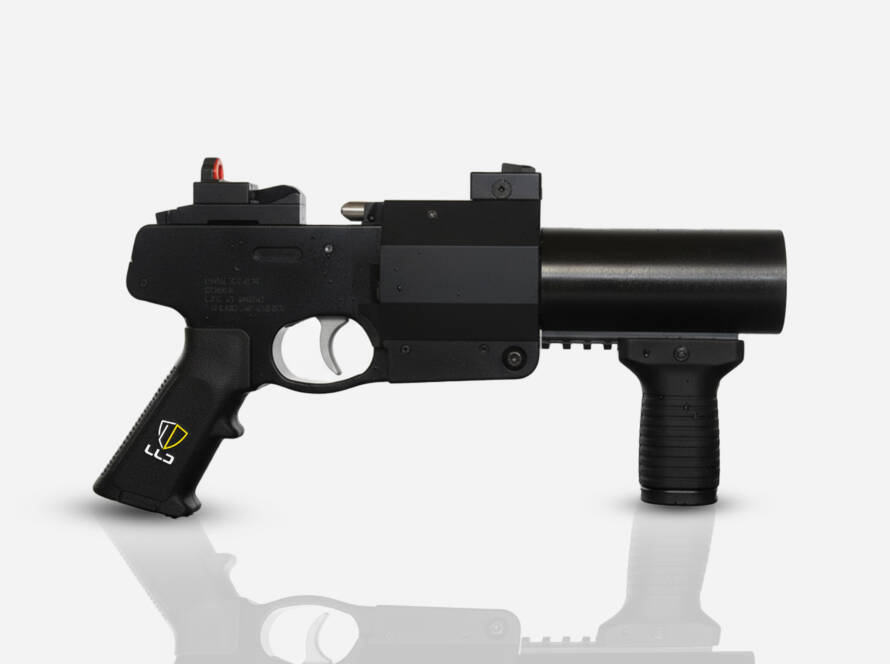
Less-lethal systems have become an essential part of modern risk mitigation strategies. Rather than being viewed as standalone tools, they function as part of a broader operational framework designed to reduce escalation, limit liability, and protect operational continuity.
Understanding their role at a systems level helps agencies deploy them responsibly and effectively.
Risk Mitigation as a Core Security Objective
Risk mitigation in security operations is not limited to physical threats. It also includes:
- Reputational risk
- Legal exposure
- Operational disruption
- Long-term community impact
Actions taken during a single incident can have consequences far beyond the immediate moment.
Less-lethal systems help reduce these downstream risks by offering controlled, predictable, and proportionate response options.
Why Escalation Is a Structural Risk
Escalation is rarely accidental. It often results from limited response options, compressed decision windows, or environmental pressure.
When response frameworks lack intermediate force options, organizations are more likely to move rapidly from verbal direction to high-impact intervention. This creates a structural vulnerability, making outcomes harder to control and justify.
Less-lethal systems address this gap by introducing scalable responses that slow situations down and reduce the likelihood of irreversible outcomes.
System Design and Predictability
In high-volume operations, predictability matters more than raw capability. Tools that behave inconsistently introduce uncertainty into already complex environments.
Modern less-lethal systems are designed with:
- Consistent deployment characteristics
- Defined effect ranges
- Controlled dispersal or impact profiles
- Clear operational boundaries
This predictability supports planning, coordination, and post-incident analysis. It also allows teams to set clear parameters for use within operational protocols.
Managing Group Dynamics Without Physical Engagement
Group behaviour introduces challenges that individual-focused tactics cannot address. Density, emotional contagion, and environmental constraints can rapidly change risk profiles.
Less-lethal systems designed for area influence rather than direct contact allow operators to:
- Redirect movement patterns
- Disrupt unsafe momentum
- Create separation without compression
- Stabilize environments before conditions deteriorate
These effects are achieved without relying on physical engagement, which often amplifies risk in crowded or confined spaces.
Reducing Collateral Impact
One of the most significant advantages of modern less-lethal solutions is their ability to limit unintended consequences.
Collateral impact can include:
- Secondary injuries
- Panic-driven movement
- Damage to infrastructure
- Interruption of essential services
By offering controlled, targeted effects, less-lethal systems help contain incidents within defined boundaries. This containment is critical for maintaining operational stability and public order.
Integration Into Operational Planning
Less-lethal tools are most effective when integrated into planning rather than introduced reactively. This integration includes:
- Defining appropriate deployment contexts
- Aligning equipment capabilities with operational goals
- Ensuring compatibility with existing systems
When treated as part of an operational ecosystem, less-lethal systems enhance coordination rather than complicate it.
Conclusion
Risk mitigation in high-volume security operations requires more than presence or authority. It requires tools and systems that support control without accelerating harm.
Less-lethal systems play a critical role in this framework by expanding response options, reducing escalation, and supporting organizational accountability.
When integrated thoughtfully, they help security operations achieve stability, continuity, and legitimacy in environments where consequences extend far beyond the immediate incident.