The use of less lethal weapons in Canada operates within a complex legal and operational framework shaped by federal law, provincial oversight, agency policy, and public accountability standards.
Canadian police agencies increasingly rely on less lethal systems to manage volatile situations while reducing the likelihood of severe injury or fatal outcomes. At the same time, the deployment of these tools remains subject to significant legal scrutiny.
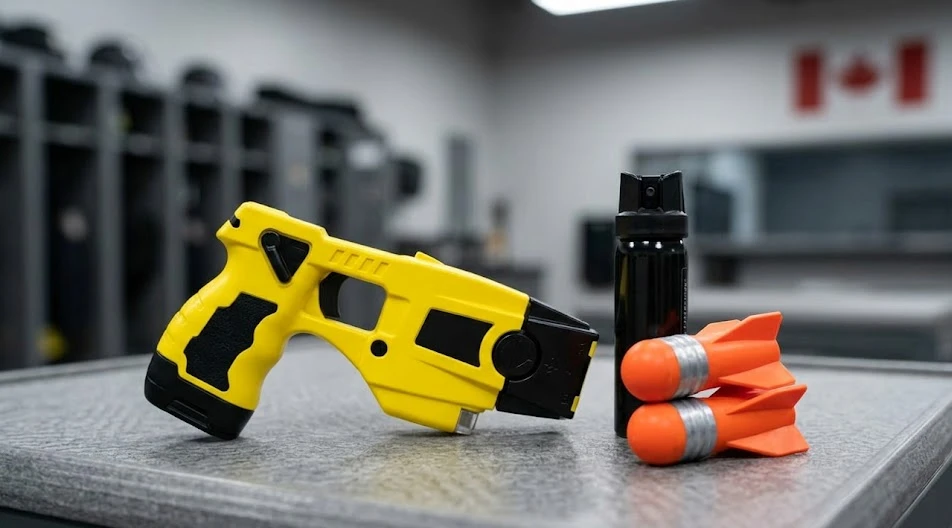
Modern less lethal systems include impact munitions, conducted energy devices, chemical irritants, launcher-based crowd control tools, and other intermediate force options designed to support proportional response.
However, the legality of deployment depends not only on the equipment itself, but also on the circumstances surrounding its use. Understanding less lethal weapons, Canadian regulations require examining how national law, provincial policy, and oversight frameworks interact within Canadian policing.
Understanding Less Lethal Weapons Within Canadian Policing
Canadian law enforcement agencies classify less lethal systems as intermediate force tools designed to control behaviour and reduce escalation while avoiding the higher probability of fatal outcomes associated with firearms.
These systems include kinetic impact projectiles, OC and CS chemical agents, conducted energy devices, and launcher-based crowd management systems. Modern police agencies use these tools in situations involving violent behaviour, crowd control operations, barricaded individuals, and behavioural crises.
Manufacturers develop systems focused on predictable performance, controlled energy transfer, and operational reliability. These characteristics align with broader Canadian policing priorities surrounding accountability, proportionality, and public safety.
As less lethal technologies continue to evolve, agencies increasingly emphasize integrated deployment systems that support measured force application within established legal boundaries.
Canadian Legal Framework Governing Less Lethal Force
Canada does not regulate less-lethal systems through a single, standalone statute. Instead, police use of force is governed through a combination of federal criminal law, constitutional protections, provincial policing standards, and internal agency policy.
The primary legal foundation is Section 25 of the Criminal Code of Canada, which authorizes police officers to use as much force as is reasonably necessary in the performance of lawful duties. However, this authority is not unlimited. Officers must demonstrate that force was justified, proportionate, and necessary under the circumstances.
The concept of objective reasonableness plays a central role in evaluating force decisions. Courts examine what a reasonable officer would have done under similar conditions, taking into account urgency, available alternatives, environmental factors, and perceived threat level.
This framework applies equally to lethal and less lethal systems.
Section 25 of the Criminal Code and Less Lethal Systems
Section 25 provides legal protection for officers acting lawfully within their duties, but only when the force used remains necessary and proportionate.
For less-lethal systems, this means officers must justify why a particular tool was selected, why deployment was necessary, and why lower-force options were insufficient at the time.
For example, deployment of impact munitions or chemical agents during crowd control operations must align with operational necessity and proportional response standards. Officers must also consider surrounding individuals, environmental conditions, and medical risk factors before deployment.
Canadian courts consistently evaluate force decisions through the lens of proportionality rather than solely based on the equipment category.
National Use-of-Force Frameworks in Canada
Canada does not maintain a single federally mandated use-of-force model that all agencies must follow. However, many police services adopt versions of the National Use of Force Framework developed through the Canadian Association of Chiefs of Police.
This framework promotes continuous assessment and proportional response. Rather than presenting force as a rigid escalation ladder, it recognizes that officers must evaluate behaviour, environmental conditions, and situational dynamics simultaneously.
The model places less-lethal systems within an intermediate force category that supports behavioural control and operational stabilization before lethal force becomes necessary.
Police agencies across Canada adapt the framework according to provincial standards and departmental policy requirements.
Provincial Differences in Less Lethal Weapon Regulations
Although federal criminal law applies nationally, provinces maintain significant authority over policing standards and operational oversight.
As a result, the use-of-force policies in Canada’s police frameworks can vary between jurisdictions. Provinces establish certification requirements, reporting obligations, policy directives, and oversight structures governing the deployment of less lethal force.
For example, British Columbia policing standards emphasize proportionality, reporting requirements, and supervisory review surrounding force incidents. Public-facing operational policies published by police agencies also reinforce accountability expectations.
Other provinces may apply different reporting thresholds or operational procedures while remaining subject to Criminal Code standards.
These provincial differences create a layered regulatory environment where federal law, provincial policy, and agency procedures all influence deployment standards.
Oversight and Accountability in Canada
Oversight bodies play a major role in reviewing the deployment of less-lethal weapons within Canadian policing.
Depending on the province, agencies such as the Independent Investigations Office of British Columbia, Ontario’s Special Investigations Unit, Alberta’s ASIRT, and similar civilian oversight organizations investigate incidents involving injury, death, or allegations of excessive force.
These oversight bodies examine whether officers acted within their legal authority and in accordance with departmental policy during force incidents involving less-lethal systems.
Review processes often focus heavily on documentation, proportionality, decision-making, and post-incident medical response. The use of specialized terminology and accurate operational reporting can significantly affect investigative outcomes.
This oversight structure reinforces accountability and public transparency surrounding police use of force.
Crowd Control and Launcher-Based Systems
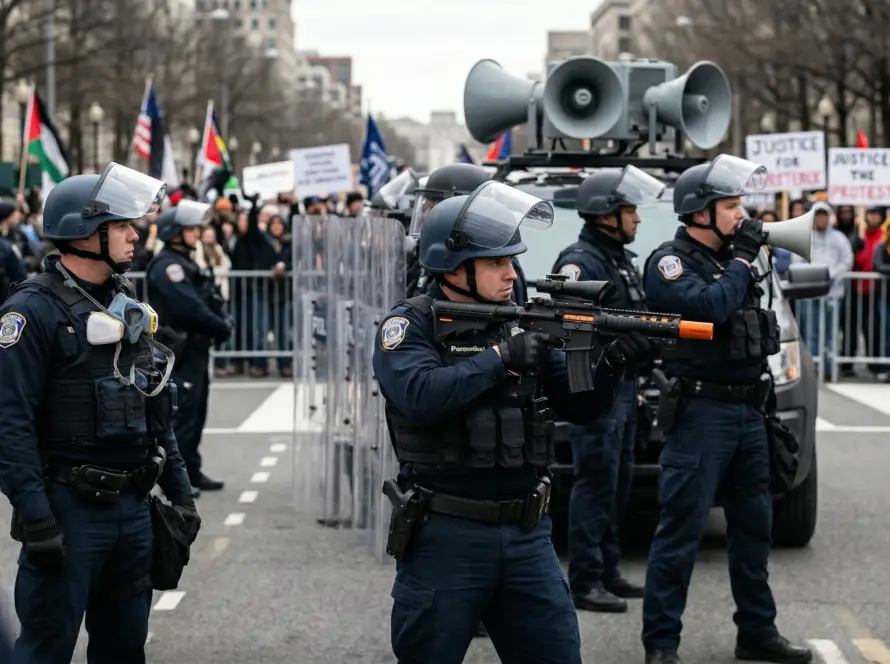
Canadian police agencies also use launcher systems during public order operations and crowd management incidents.
These tools may deploy smoke, impact, or chemical irritant rounds designed to create behavioural influence and restore operational control.
Modern launcher systems prioritize controlled energy transfer and predictable deployment characteristics.
Agencies selecting crowd control systems increasingly favour integrated launcher and ammunition platforms designed around accountability and operational consistency.
Public Safety and Operational Risk Management
Canadian public safety priorities strongly influence policy on the deployment of less-lethal weapons. Agencies must balance officer safety, public protection, and constitutional rights while responding to volatile situations.
This balance has increased emphasis on intermediate-force options capable of reducing escalation without immediately resorting to firearms.
Modern less-lethal systems support this objective by providing distance-based response options that allow officers to stabilize situations while maintaining greater operational flexibility.
At the same time, agencies recognize that less-lethal systems still pose medical risks. Chemical irritants, impact munitions, and conducted energy devices all require careful deployment in accordance with clearly defined operational standards.
Integration of Modern Less Lethal Systems
Police agencies increasingly evaluate less lethal systems as integrated operational platforms rather than standalone tools.
Manufacturers emphasize compatibility between launcher systems and specialized ammunition to improve predictability and deployment consistency. This systems-based approach aligns with Canadian policing priorities surrounding measured force and operational accountability.
Additional information on modern less lethal operational philosophy can be reviewed at: https://lesslethaldefenx.com/complete-guide-to-choosing-the-right-less-lethal-weapon-for-security-teams/
Conclusion
Less-lethal laws and Canada’s frameworks reflect a layered legal structure built around proportionality, accountability, and operational necessity. Canadian police agencies must navigate federal criminal law, provincial oversight standards, agency policies, and public expectations when deploying less-lethal systems.
From launcher-based crowd management systems to chemical irritants and impact munitions, modern less-lethal tools are increasingly playing an important role in Canadian policing. At the same time, every deployment remains subject to legal scrutiny and independent review.
Manufacturers such asLess Lethal DefenX continue to support evolving operational requirements through integrated systems focused on predictable performance and controlled response. As Canadian policing standards continue to evolve, less-lethal systems will remain central to balancing officer safety, public accountability, and measured force application.
Frequently Asked Questions
What Canadian laws govern police use of less lethal force?
Police use of less-lethal force in Canada is primarily governed by Section 25 of the Criminal Code, provincial policing legislation, agency policy, and constitutional legal standards on proportionality and reasonableness.
Does Canada have a national use-of-force framework for police agencies?
Canada does not enforce a single mandatory national framework, but many agencies follow versions of the National Use of Force Framework developed through Canadian policing organizations.
How does Canada’s Criminal Code Section 25 apply to the use of less lethal weapons by police?
Section 25 authorizes officers to use reasonably necessary force while performing lawful duties. Less lethal deployment must remain proportionate, justified, and objectively reasonable under the circumstances.
Are there provincial differences in less lethal weapon regulations across Canada?
Yes. Provinces establish different operational standards, reporting requirements, oversight procedures, and certification expectations for police agencies.
What oversight bodies in Canada investigate complaints about less-lethal weapon use by police?
Oversight agencies vary by province and may include organizations such as the Special Investigations Unit in Ontario, the Independent Investigations Office in British Columbia, and similar civilian review bodies across Canada.