Border security operations require a careful balance between enforcement, mobility control, and operational restraint. Unlike traditional policing environments, border checkpoints and perimeter zones often involve high vehicle traffic, large groups of people, uncertain threat conditions, and rapidly evolving encounters.
In these situations, agencies rely heavily on structured force options that provide control without immediately escalating to lethal measures.
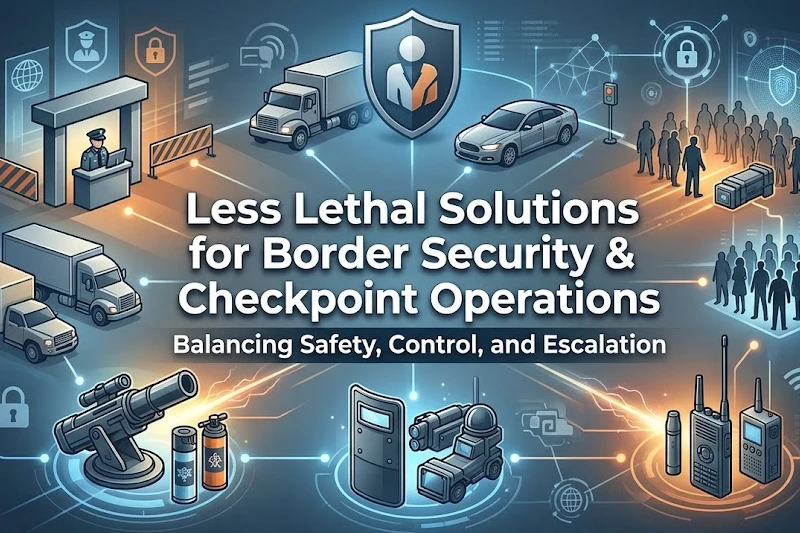
Modern, less lethal border security systems have become essential tools within this operational framework. From launcher-based impact munitions and chemical irritants to vehicle interdiction tools and perimeter control systems, these technologies support controlled responses across complex checkpoint environments.
As border operations continue to evolve, agencies increasingly prioritize scalable force options that align with accountability, safety, and tactical flexibility.
The Growing Role of Less Lethal Systems in Border Operations
Border checkpoints operate differently from standard law enforcement settings. Officers must manage crowd movement, vehicle screening, perimeter breaches, and potential public disorder within confined operational zones. These environments require equipment that enables officers to maintain distance, remain mobile, and respond proportionately to threats.
Modern border patrols’ less lethal equipment provides agencies with tools designed for controlled behavioural influence rather than permanent harm. These systems support containment, crowd management, and threat interruption while reducing the likelihood of severe injury.
This operational standard has increased demand for less-lethal systems that support graduated response options in border enforcement environments.
Why Border Checkpoints Require Specialized Less Lethal Tools?
Checkpoint operations pose challenges that differ significantly from those in urban policing or correctional environments. Officers often work in open areas with unpredictable traffic patterns and limited physical barriers. Encounters may involve multiple individuals, vehicle congestion, or coordinated attempts to breach secure zones.
These conditions require checkpoint crowd-control tools that can manage movement without immediately turning off infrastructure or unnecessarily escalating force.
Launcher-based systems are particularly effective in these scenarios because they allow officers to maintain engagement distance while deploying impact munitions, smoke rounds, or chemical irritants. This flexibility helps stabilize volatile conditions without requiring direct physical confrontation.
Manufacturers focus on integrated systems designed around predictable energy transfer, controlled dispersal, and operational reliability. Their solutions align with modern border enforcement priorities that emphasize accountability and measured force application.
Common Less Lethal Systems Used in Border Security
Border control operations rely on several categories of less-lethal systems, depending on the operational environment and threat level. Kinetic impact munitions are widely used to interrupt aggressive movement and create behavioural compliance. These rounds transfer controlled blunt energy designed to influence behaviour while reducing penetration risk.
Chemical irritants also play a major role in perimeter defence and less lethal strategies. Oleoresin Capsicum (OC) and CS formulations can disperse crowds, interrupt coordinated movement, and create a controlled stand-off distance during checkpoint incidents.
Smoke and signalling rounds support visibility management and tactical communication during larger perimeter operations. These systems help establish movement boundaries and reinforce operational structure within active zones.
Border agencies may also use acoustic devices, lighting systems, and vehicle interdiction technologies as part of layered, less-lethal frameworks.
Vehicle Interdiction and Barrier Systems
One of the most unique aspects of border operations involves vehicle management. Border checkpoints frequently encounter attempts to bypass inspection points or breach secured areas using vehicles.
Less-lethal vehicle barriers are designed to stop or redirect vehicles without resorting to destructive force. These systems may include retractable barriers, spike systems, controlled access gates, and engineered roadblock devices.
The purpose of these technologies is not punishment but movement control. By safely slowing or stopping vehicles, officers gain additional time to assess threats and coordinate a response.
Vehicle interdiction systems are a critical part of the less-lethal perimeter defence strategy because they reduce the need for immediate escalation during checkpoint breaches.
Crowd Control in Border Security Environments
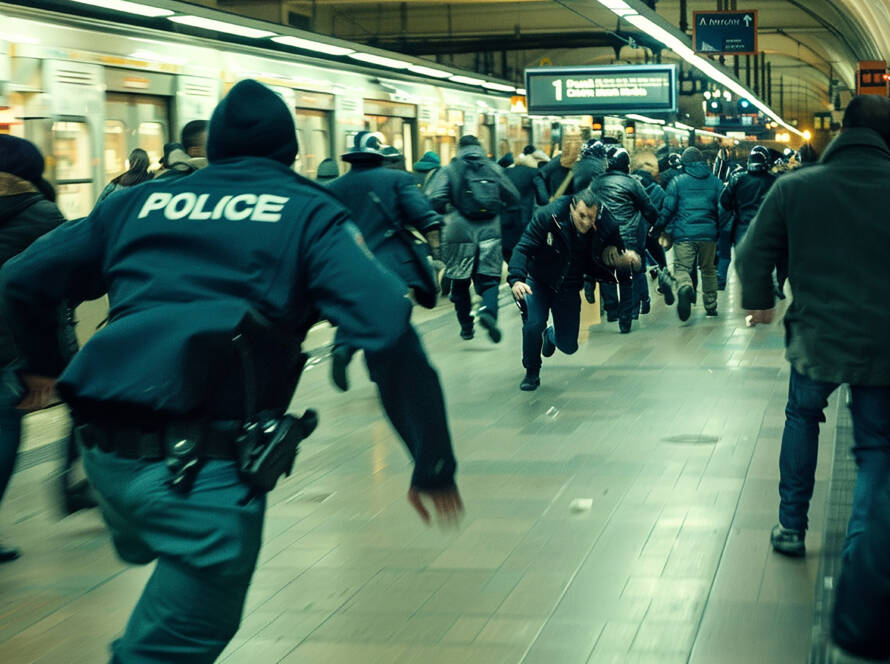
Border operations can involve large groups moving through confined areas under stressful conditions. In these situations, maintaining order requires systems that can influence group behaviour without causing panic or secondary hazards.
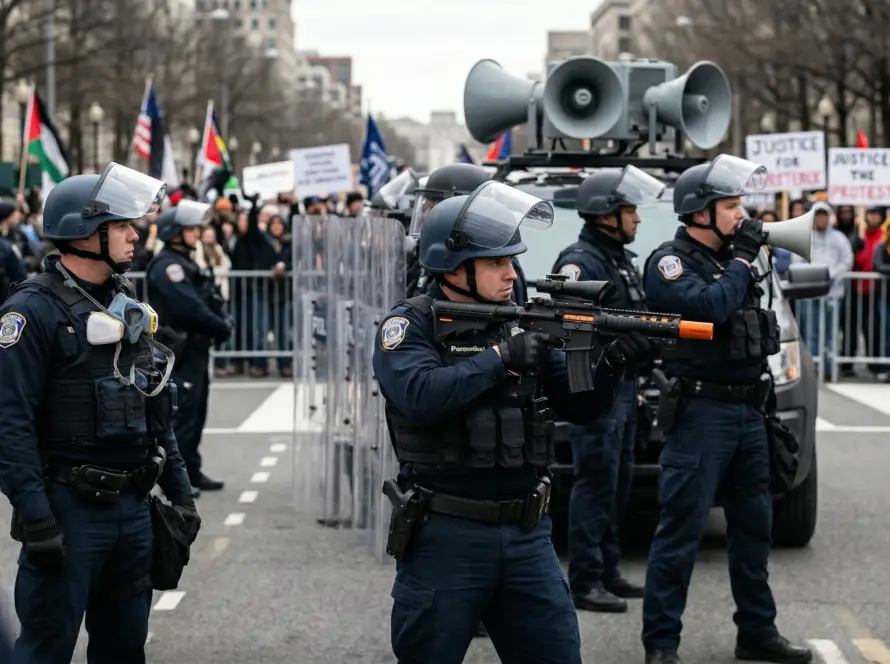
Checkpoint crowd control tools often include launcher systems capable of deploying smoke, irritant, or impact rounds. These tools allow officers to create spacing, redirect movement, and restore operational control.
Maintaining engagement distance is especially important in crowded border environments. Distance-based response options improve officer visibility, reduce physical confrontation, and support more deliberate decision-making.
Modern less-lethal systems therefore serve both tactical and operational functions by helping agencies stabilize conditions before situations escalate further.
Rules of Engagement and Use-of-Force Standards
Border agencies operate under strict rules governing the use of force. Operational decisions must align with legal standards requiring necessity, proportionality, and objective reasonableness.
The CBP use-of-force framework states that officers may use force only when reasonably necessary to protect themselves or others, prevent serious offences, or maintain lawful enforcement actions.
Less lethal systems support these standards by providing intermediate response options between verbal direction and lethal intervention. Officers can therefore adjust force levels according to evolving threat conditions rather than relying on binary response models.
This flexibility is one of the primary reasons less lethal systems have become essential in modern border operations.
Importance of Integrated Launcher Systems
Modern border patrol less-lethal equipment increasingly relies on integrated launcher platforms designed to operate with specialized ammunition systems.
Launcher-based systems provide operational versatility by allowing officers to deploy impact munitions, chemical irritants, smoke rounds, and signalling projectiles from a single platform. This adaptability is especially valuable in dynamic checkpoint environments where conditions may shift rapidly.
Less Lethal DefenX emphasizes compatibility between launcher systems and ammunition design to ensure predictable performance and controlled outcomes. Integrated systems reduce uncertainty during deployment and improve operational accountability.
Conclusion
Less lethal border security systems now play a central role in modern checkpoint and perimeter operations. These tools allow agencies to manage movement, control escalation, and respond proportionately within environments that often involve uncertainty and rapid behavioural shifts.
From launcher-based crowd-control systems to vehicle interdiction technologies, modern less-lethal tools support operational flexibility while reinforcing accountability and safety.
Manufacturers continue to develop integrated systems designed around predictable performance and controlled response.
As border operations continue to evolve, less lethal systems will remain essential components of effective perimeter control and checkpoint management strategies.
Frequently Asked Questions
What less lethal weapons are used by border patrol and border security agencies?
Border agencies commonly use impact munitions, chemical irritants, smoke rounds, launcher systems, acoustic devices, and vehicle interdiction technologies, depending on operational requirements.
Why are less lethal weapons critical for border checkpoint operations specifically?
Checkpoint environments involve crowd movement, vehicle traffic, and unpredictable interactions within confined operational areas. Less lethal systems provide scalable response options that support control while reducing escalation risk.
What are the rules of engagement for less lethal weapons at border checkpoints?
Force application must remain objectively reasonable, necessary, and proportionate to the threat encountered. Officers must use force only when lawful objectives cannot be achieved through lower levels of intervention.
How are less lethal vehicle barriers used at border security checkpoints?
Vehicle barriers slow, stop, or redirect vehicles attempting to bypass or breach secured areas. These systems create controlled access points and improve officer response time during active incidents.
What training do border security agencies require before deploying less lethal weapons?
Border agencies establish certification and operational qualification standards before officers are authorized to use specialized less lethal systems. Requirements vary depending on agency policy and equipment type.